My work in Universal Music
campaign Designer
freelance work
2019
In 2019, I partnered with Universal Music to design a series of interactive campaign experiences connected to Spotify playlists. I worked alongside a front-end developer throughout the project, leading the design, collaborating on implementation, and serving as the main point of contact with the client. While the developer focused on building the experiences, I was responsible for the visual design and ensuring each campaign aligned with Universal Music’s creative direction.

Each experience was created around a different artist or release while following the same concept. Fans completed a simple interaction, such as a quiz or a game, before receiving a personalized Spotify playlist based on their results. Although the technical structure remained the same, every campaign required its own visual direction using the assets provided by Universal Music.
Maroon 5: Memories
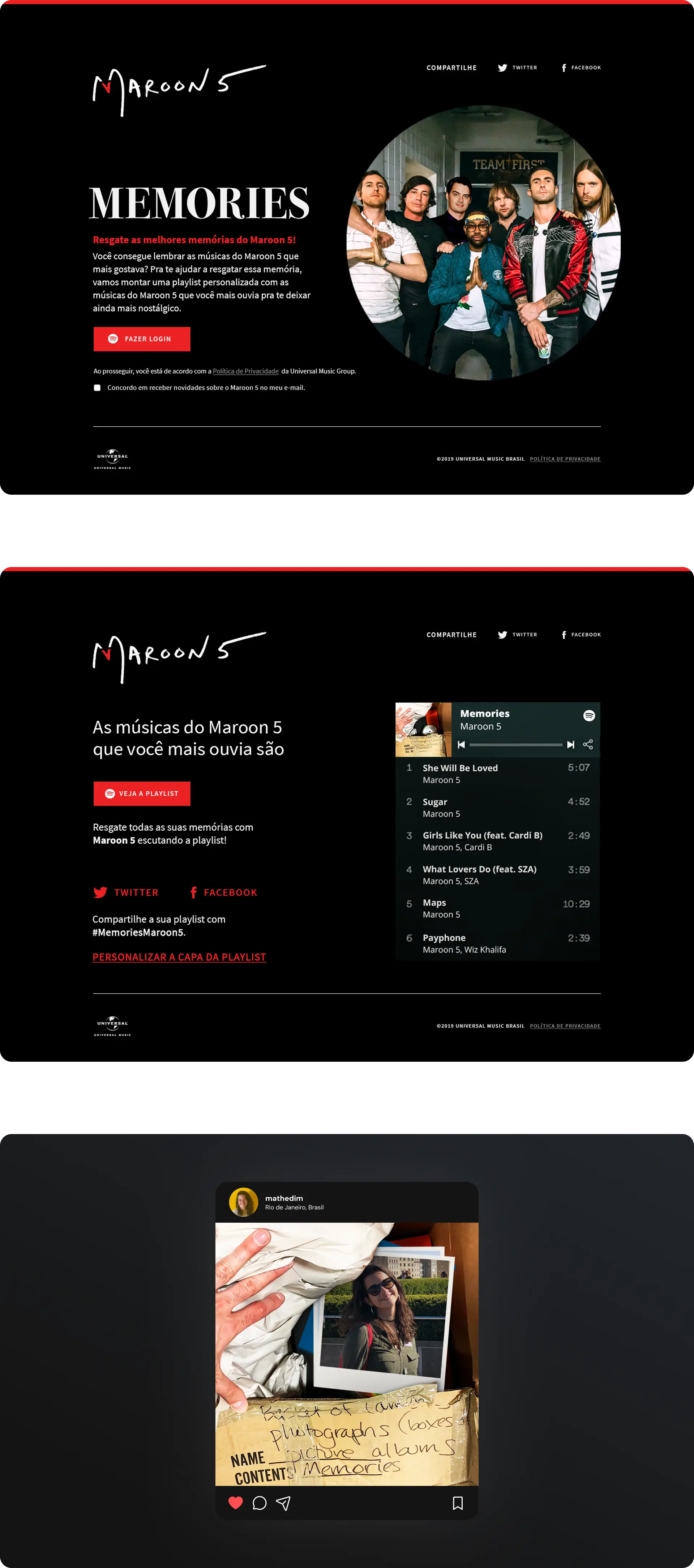
This first Maroon 5 campaign promoted the release of Memories. The experience invited users to revisit their favorite moments with the band before generating a personalized Spotify playlist. After completing the interaction, users could customize the playlist cover with their own profile picture, extending the campaign beyond the landing page itself.
Maroon 5: Tour
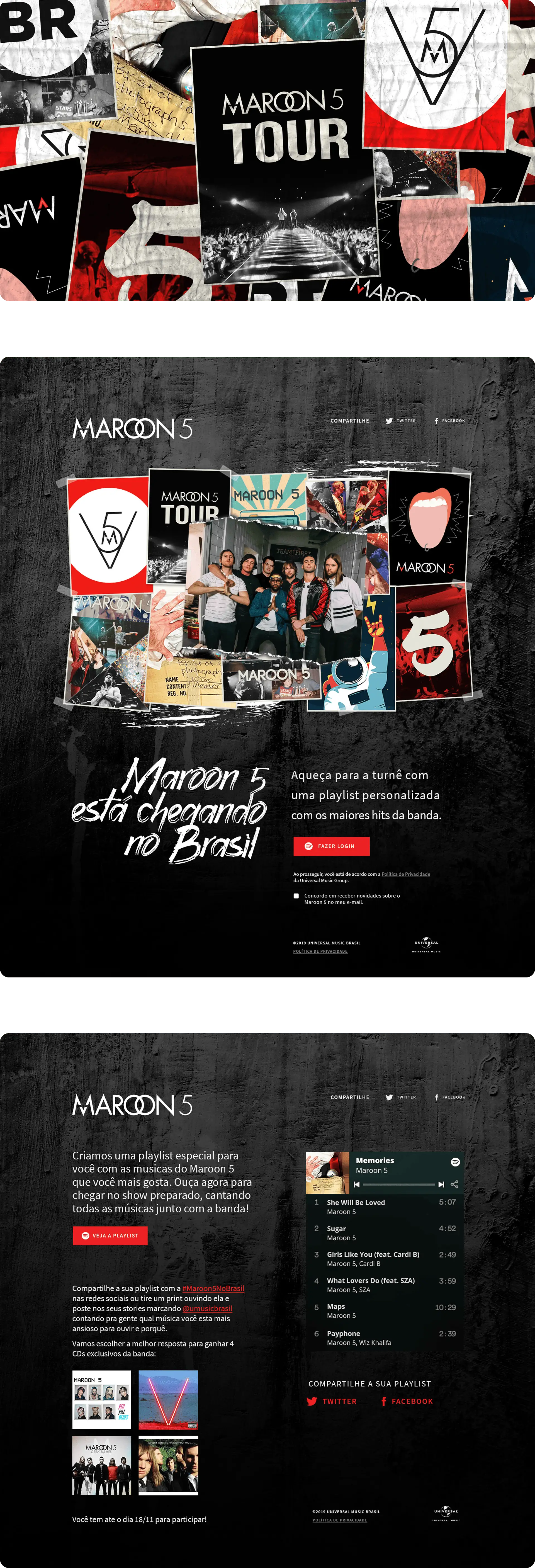
To promote Maroon 5’s 2020 Brazil tour, this campaign invited fans to generate a personalized Spotify playlist featuring some of the band’s biggest songs before the concerts. I adapted the campaign’s visual identity into an interactive experience that extended the tour across another digital platform.
Sandy & Junior
This campaign celebrated Sandy & Junior’s Nossa História reunion tour in 2019. Visitors answered a short quiz about their connection with the duo and, based on their responses, were matched with one of four Spotify playlists inspired by different Sandy & Junior songs. The experience also generated shareable social media cards, allowing fans to post their results after completing the campaign.
Simone & Simaria + Marília Mendonça
Created to promote the release of O Que É O Que É?, this campaign added a playful layer to the playlist experience through a digital prize wheel. After logging in with Spotify, users spun the wheel to receive one of four themed playlists randomly. The interaction introduced an element of surprise while staying aligned with the campaign’s visual identity and playful tone.
Working with Universal Music showed me how the same interaction can take on completely different personalities through design. Each campaign started with an established visual identity, but my role was to adapt it into an engaging digital experience while preserving what made each artist immediately recognizable.
My work in DeepHow
lead brand designer
remote work
2020—2025
The beginning
I joined DeepHow in 2020 at an early stage, when the company had around 10 employees and no formal design or marketing team, and stayed until mid-2025. During that time, I worked as the sole brand and marketing designer, supporting company-wide design needs.
Over time, DeepHow grew to over 100 employees and into an AI-powered platform used by industrial and frontline teams to capture and share operational knowledge. The product turns expert processes into video-based instructions that can be searched and used on the job, supporting tasks like onboarding, work verification, and day-to-day guidance.


Starting as a Lead Brand Designer
As Lead Brand Designer, I was responsible for shaping DeepHow’s look, feel, and communication across every touchpoint. My work connected marketing and product through a consistent visual language that evolved alongside the company’s growth.

I created brand assets for presentations, conferences, social campaigns, and product launches, keeping the visual identity consistent across all materials. I also worked closely with marketing and product teams to keep things aligned and improve the overall quality of the work. One of my key contributions was improving the marketing design workflow, making it faster, more organized, and easier to scale.
This shift came with more creative ownership over time. Early on, most work depended on executive approvals, which slowed things down and made the process more reactive. As I gained trust, I took full ownership of the brand and marketing design workflow, defining timelines, organizing feedback, and planning deliverables more intentionally. This made the process smoother overall and allowed me to focus more on concept and structure before jumping into execution, resulting in more consistent and timely delivery.

During my time there, I worked on the website redesign twice, each version reflecting a different stage in the company’s journey. The first redesign marked DeepHow’s transition into a professional, enterprise-ready presence. The second, years later, embodied a more confident and unified brand expression, refined through collaboration with a larger team. Below is the 2025 homepage version.
Partnering with the Product Team
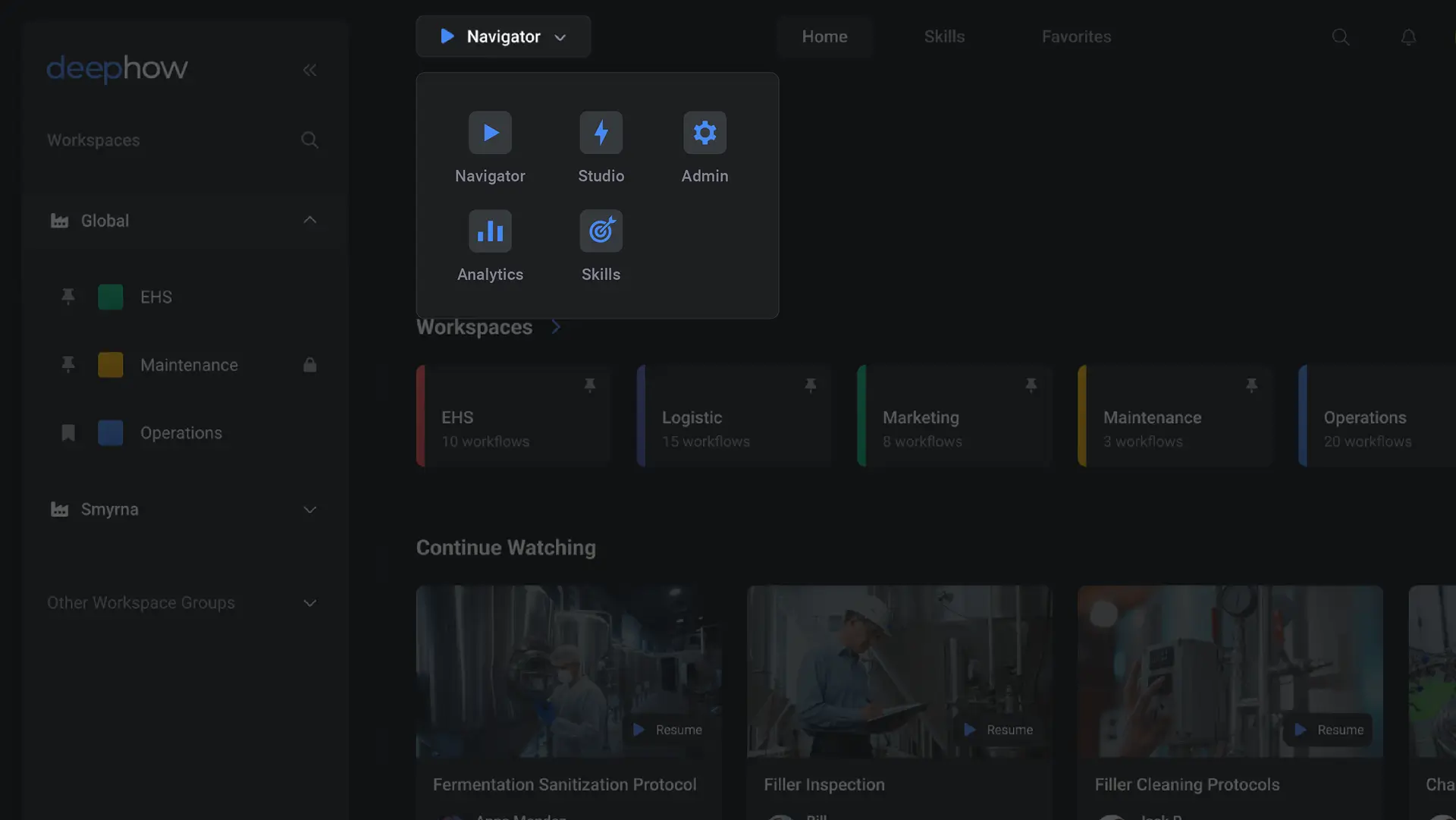
In the early stages, my collaboration with the product team began with smaller contributions, such as designing icons to represent each platform feature before the UI was redesigned. I also created empty-state and onboarding illustrations for the product to provide clearer guidance and enhance the platform's visual experience.
Project 1
Project 2
Project 3
Project 4
The most significant collaboration with the product team came later through the redesign of DeepHow’s embedded video player on the website. The original version was a direct embed of the platform player, not fully optimized for a public, non-logged-in experience. Instead of making a minimal adaptation, we rebuilt the player from the ground up, designing a version specifically for website users without DeepHow accounts.

Working closely with product and engineering, I redesigned the full UI/UX of this experience and created the custom video cover cards that now introduce the content before playback. The leadership team responded so strongly to these cards that they later requested the product team to bring the same visual approach into the platform itself.
Project 1
Project 2
Project 3
Project 4
Designing within DeepHow
Designing at DeepHow meant navigating constant change. In the early days, the company lacked a clear visual foundation, with no consistent structure, reusable patterns, or brand cohesion. Every project felt like starting from scratch. There was rarely time to pause for a complete rebrand, so evolution happened gradually, piece by piece, through persistence and small wins.

Each new asset was a chance to refine the visual identity. Over time, these small updates added up and shaped DeepHow’s current brand style. I also kept learning along the way, improving my skills in Figma and Webflow and getting better at communicating and collaborating with teams.
Humans of Manufacturing Project
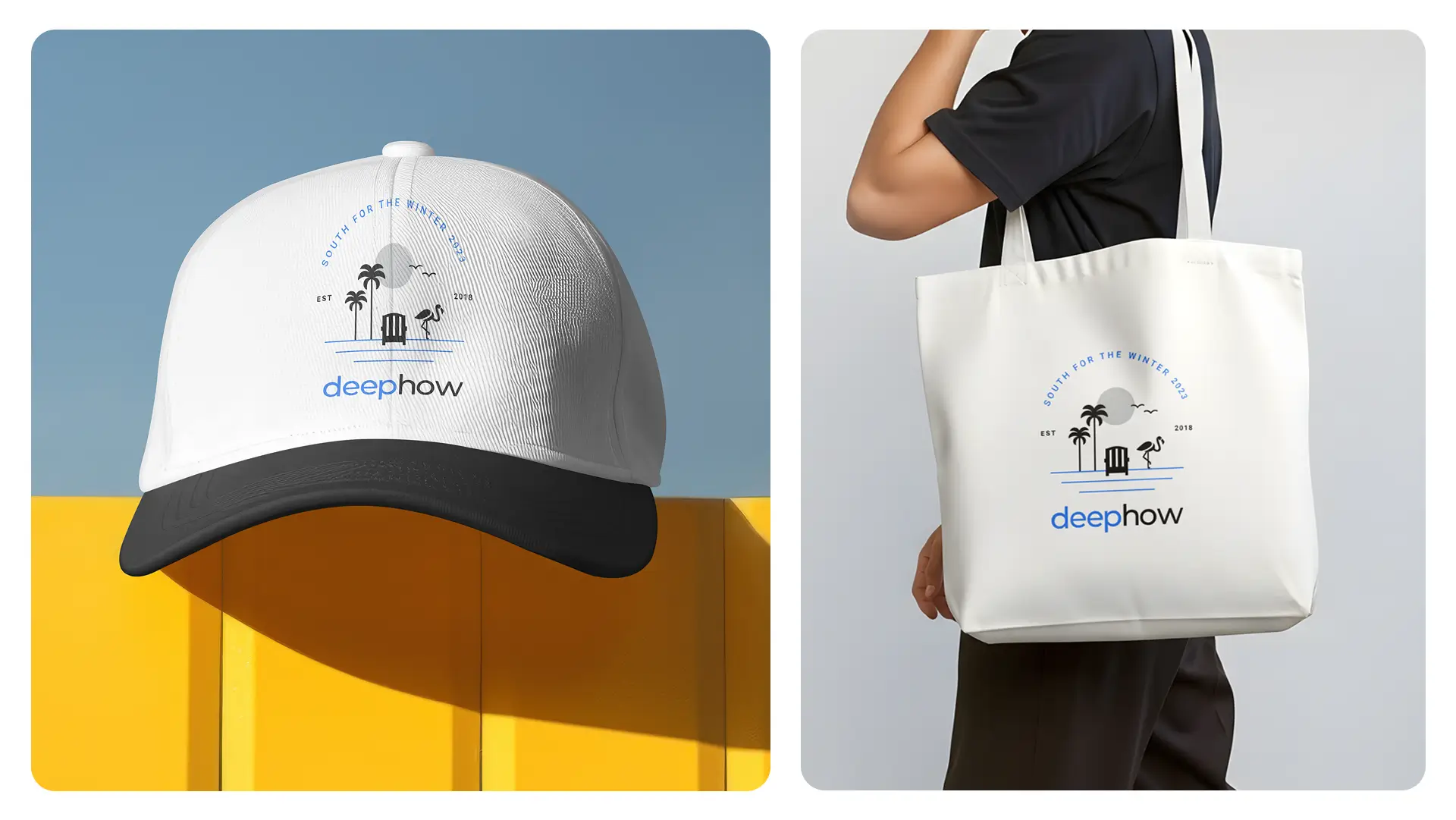
South for the Winter 2023 Swags
White Papers
DeepHow Maven Logo
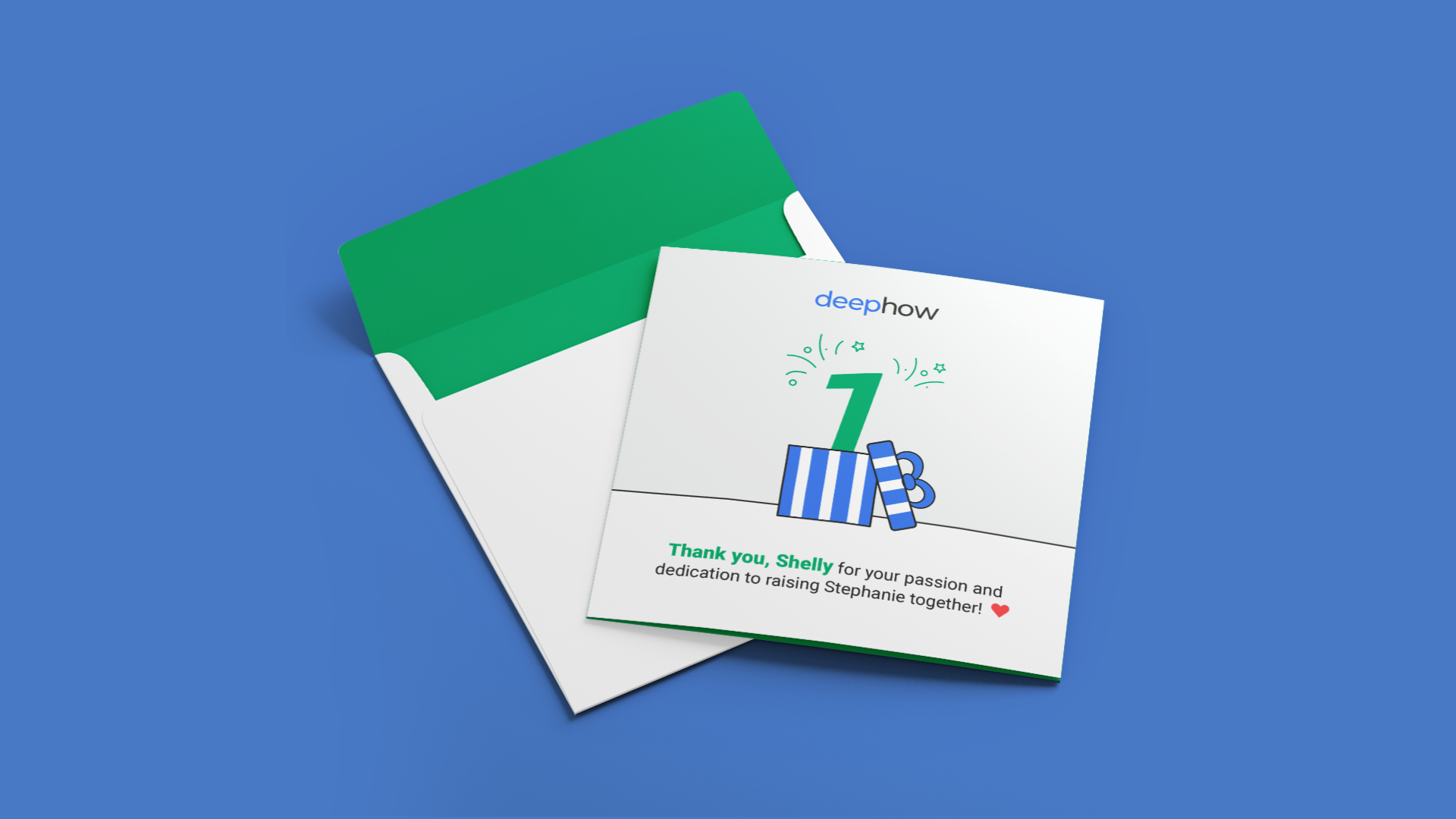
Anniversary Card
DeepHow Skills Certificate
The challenges
When I joined, DeepHow had an early-stage brand identity in place. As the company grew, it became clear that the visual system needed to evolve. The visual language was limited, with a restrained color palette and few supporting assets, which made it harder to scale across different formats. With these constraints, I focused on gradually building a more flexible and scalable design system.
The solutions
The challenges at DeepHow were not solved in a single project. They evolved over years of minor, intentional refinements, turning every campaign, presentation, and landing page into an opportunity to test and improve. Gradually, I introduced subtle but consistent updates such as richer mockups, custom illustrations, and a stronger visual narrative that connected the brand’s technical core with its human purpose. Over time, these decisions added up to a design language that felt more cohesive, mature, and aligned with the product’s sophistication.

One of the most important shifts was moving toward a more product-focused approach. The design started to rely on product UI and custom mockups to show how DeepHow actually works, replacing generic stock imagery.
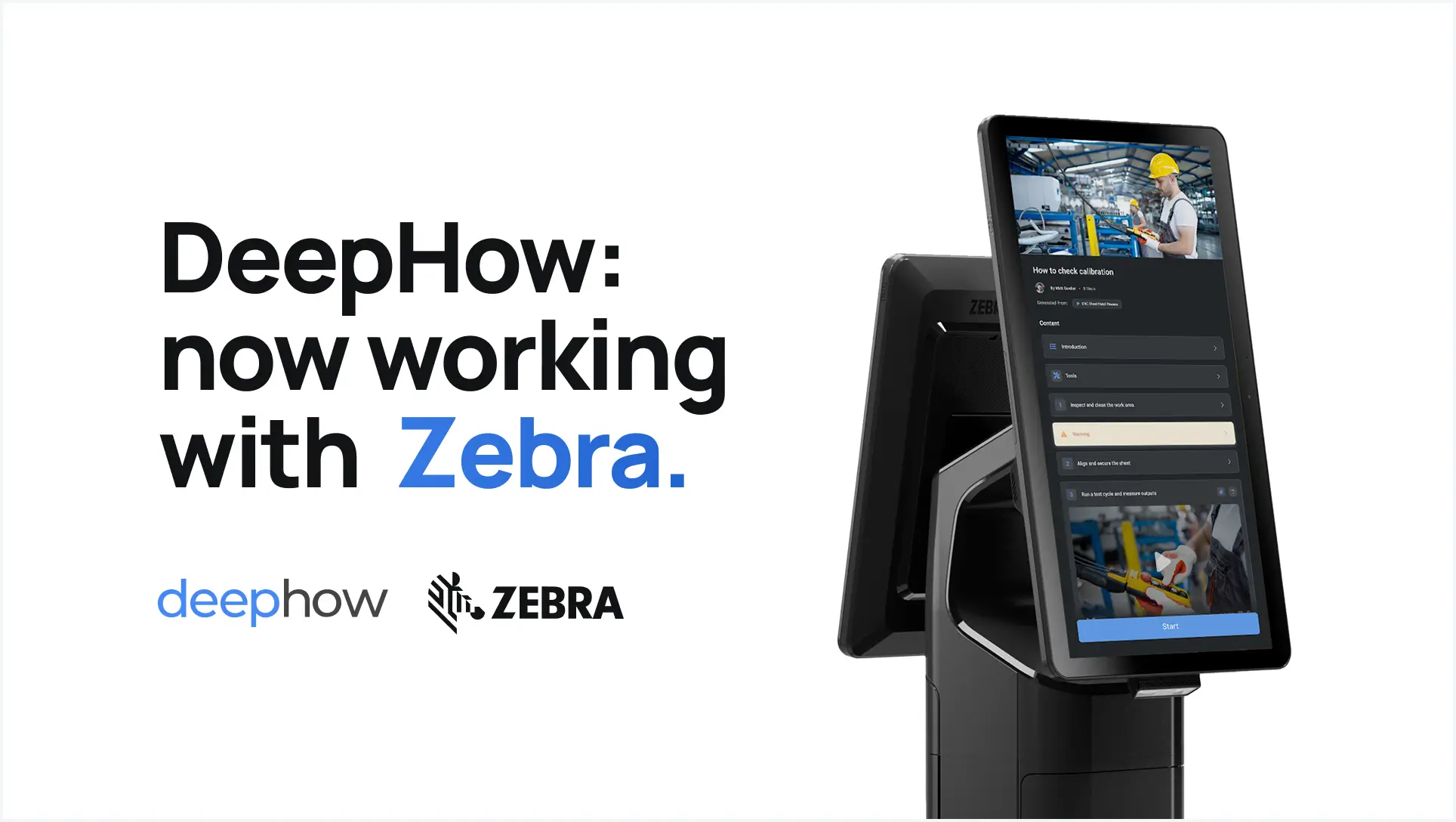
Zebra Partnership Announcement
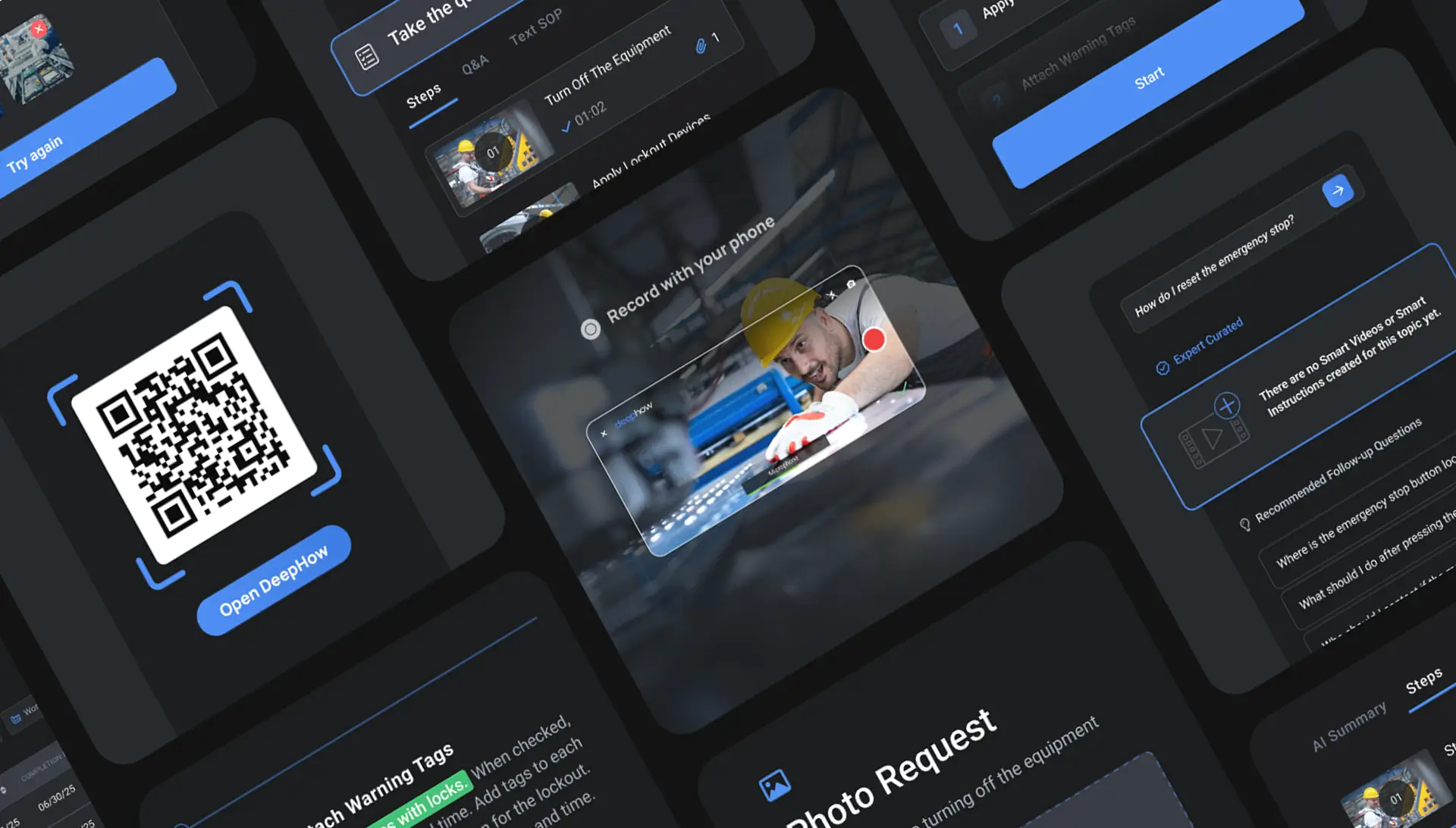
Website UI Illustration Pack
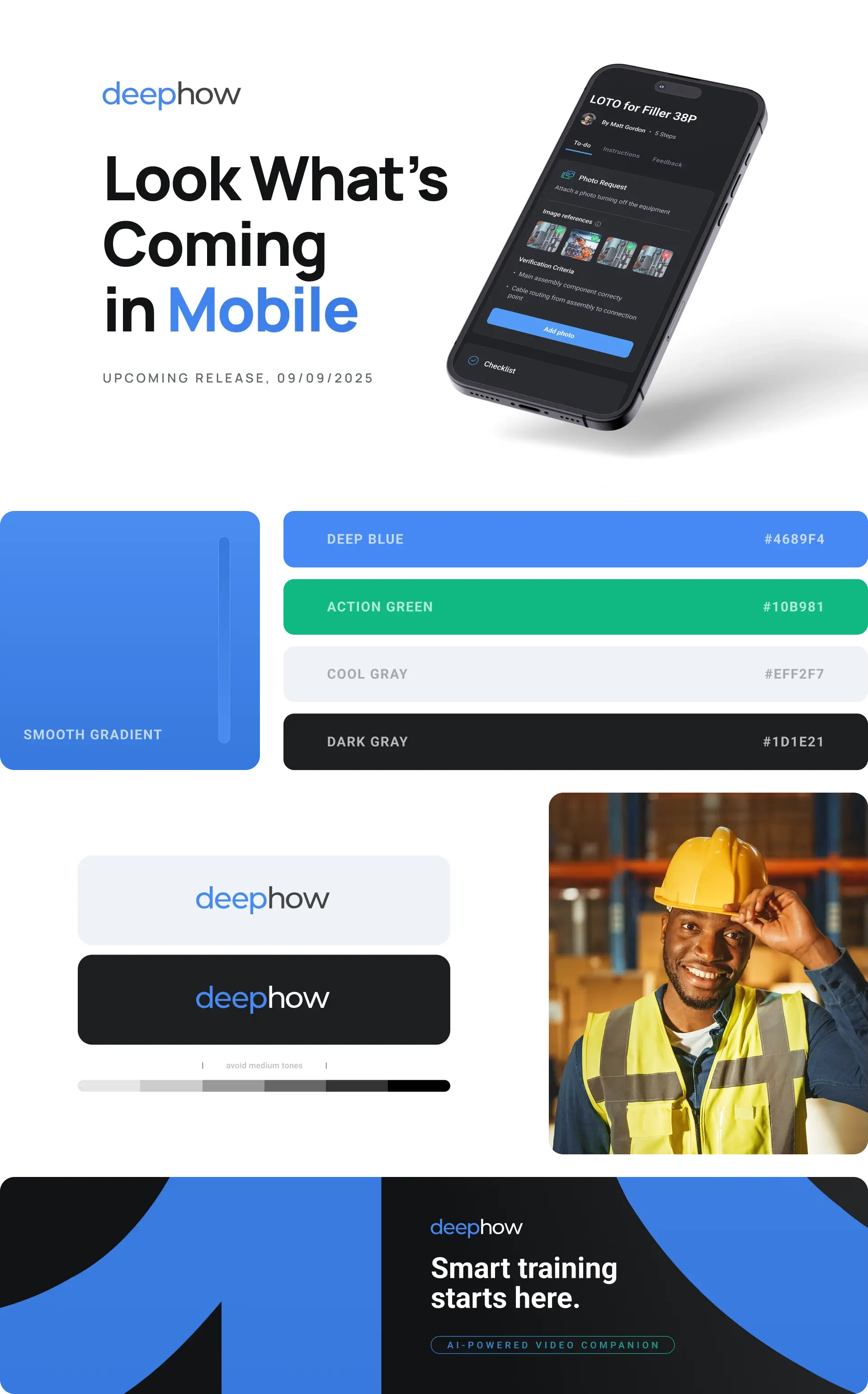
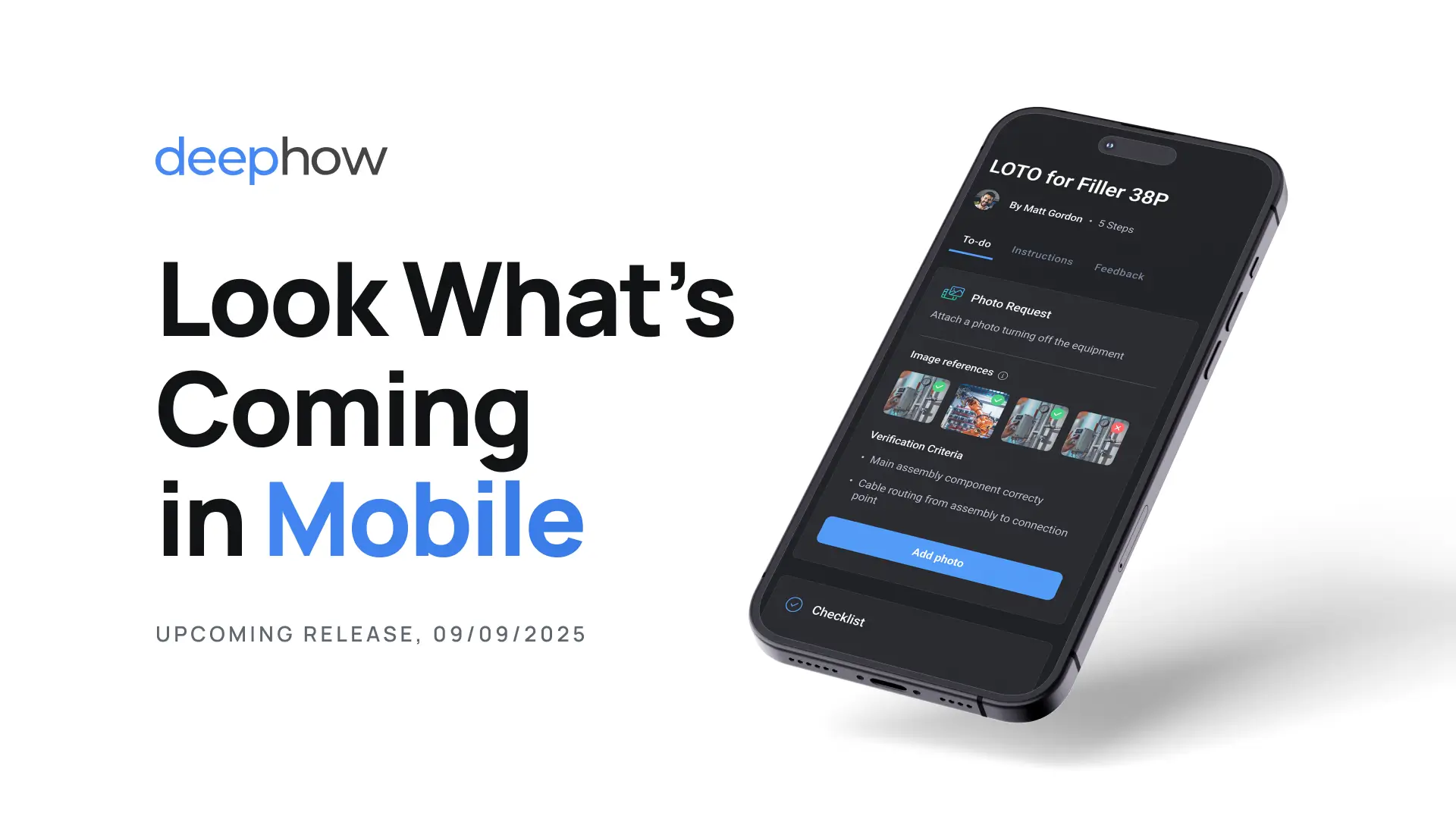
Smart Assist Mobile Launch
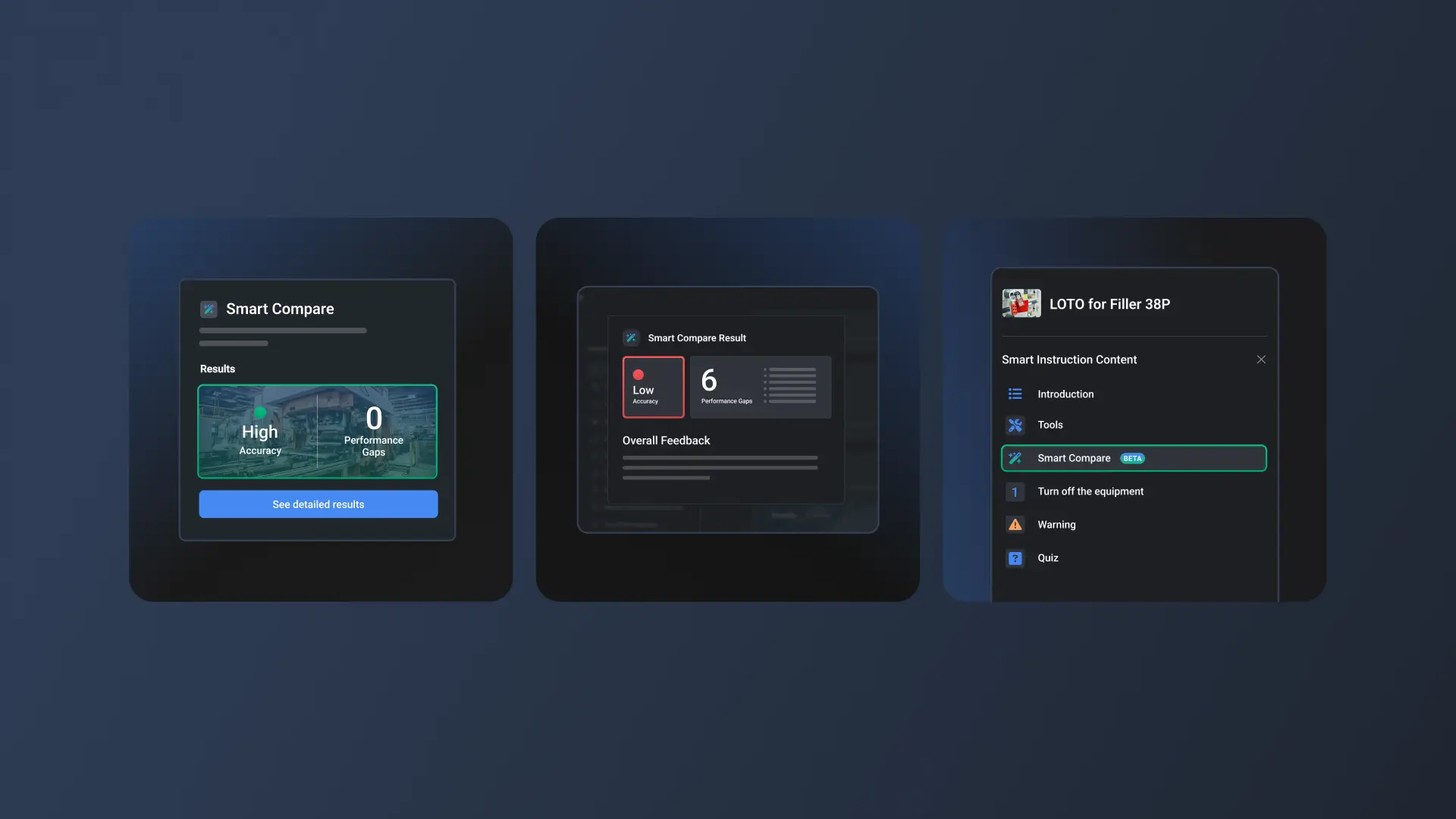
Smart Compare Illustrations for Campaign
AI Capabilities Illustrations for Campaign
Smart Assist Illustrations for Campaign
Impact and results
The 2025 website redesign reshaped how DeepHow was perceived, both internally and externally. It now reflects the company’s maturity and communicates clearly what once required long explanations.

The redesign enabled our marketing team to extend the new visual direction across every piece of communication, bringing a consistent look and feel that transformed how DeepHow presented itself.
Design contribution
What I learned in the five years I worked on DeepHow is that strong design comes from doing the basics well. Across these projects, I focused on keeping the brand consistent across everything we produced, whether digital or print, internal or external. The goal was to make communication clear, easy to follow, and look good across all touchpoints.